Home · Animals
Who lives up here
Animals that make the tundra work
A treeless plain with a 50-to-60-day growing season does not sound like a crowded place. It isn’t. But the animals that do live on the Arctic tundra have some of the strangest tricks in the mammal and bird world, and several of them are measured, not guessed.
The muskox and the warmest wool
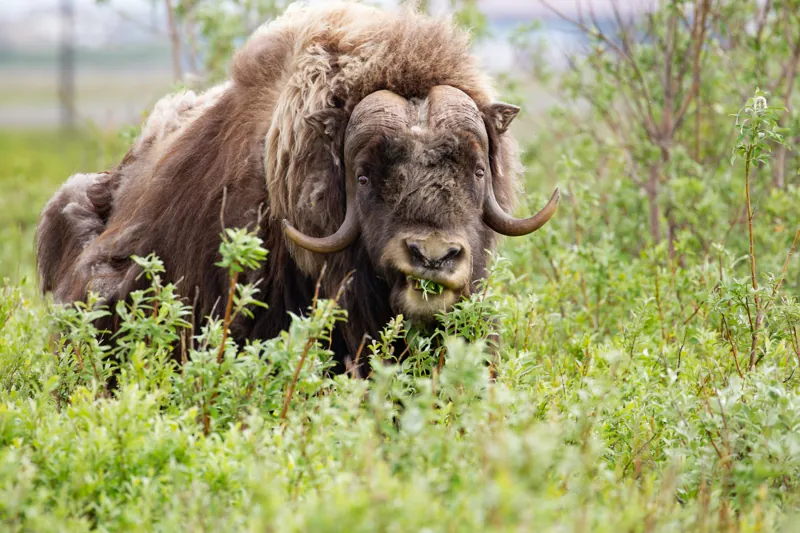
The muskox looks like a rug that has decided to go for a walk. Under the long guard hairs is a soft underwool called qiviut. The Alaska Department of Fish and Game describes it as extremely soft and eight times warmer than wool, by weight. [ADF&G muskox] The same article says it is a fine fibre comparable to cashmere, alpaca or fine merino, and that a one-ounce skein of yarn fetches close to $100. [ADF&G muskox] In 1930 the U.S. Congress gave the Biological Survey $40,000 to acquire a herd of muskoxen for introduction into Alaska, which is a sentence you do not read every day. [ADF&G muskox]
The Arctic fox changes its coat twice a year
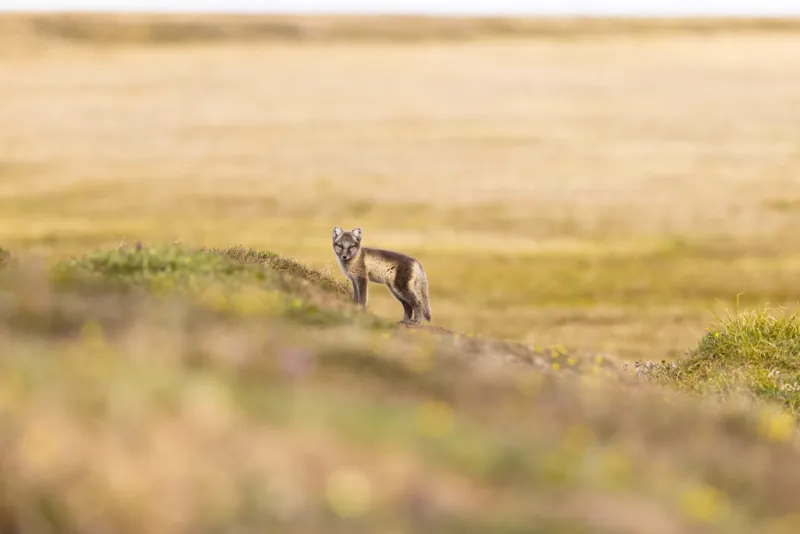
Arctic foxes begin shedding in early April and by late June wear their summer fur, sleek brown and grey. The change back begins in September, and by November the white winter coat is complete. [ADF&G foxes] That winter coat is twice as thick and dense as the summer one, and with a compact, round body and short ears, ADF&G says the Arctic fox can survive temperatures below −50°F (about −46°C). [ADF&G foxes] A small percentage of Arctic foxes are a dark charcoal “blue” colour morph, and stay dark all year. [ADF&G foxes]
The lemming: small, white in winter, and much misunderstood
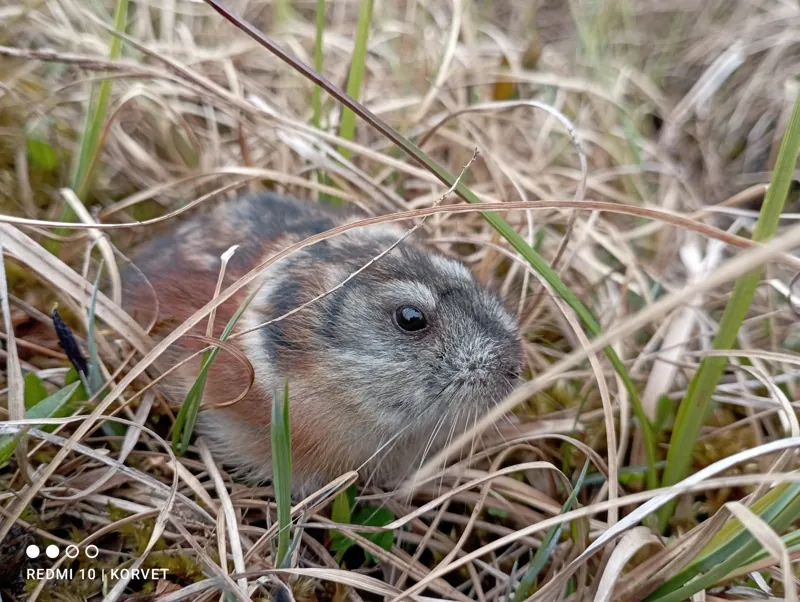
Lemmings are short-tailed, mouse-like rodents that favour tundra and open grassland. About 20 lemming species live in the circumpolar north. [ADF&G lemmings] The collared lemming is the only rodent in North America that turns white in winter. [ADF&G foxes] Lemming numbers rise and fall enormously; under ideal conditions, ADF&G says, a vole population can increase tenfold in a single year, and when food runs out the animals disperse. [ADF&G lemmings] They do not throw themselves off cliffs. That story is on the myths page, with the film that faked it.
The Arctic ground squirrel goes below freezing
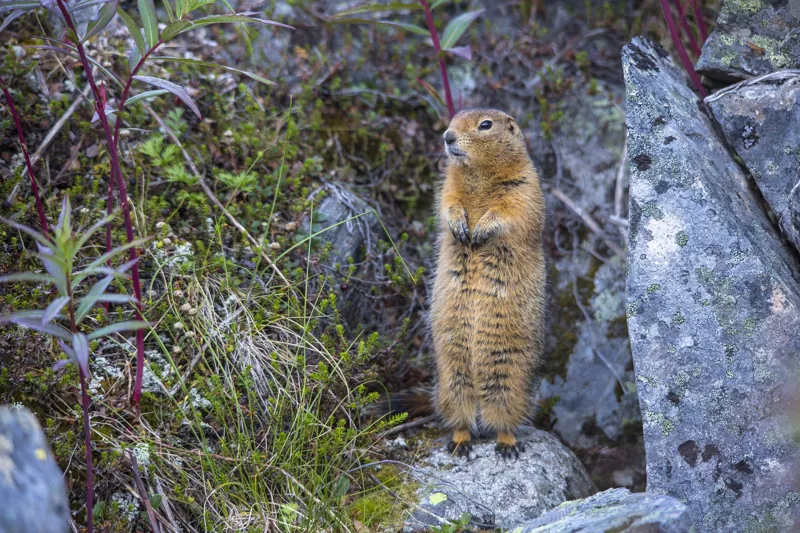
In 1989 Brian Barnes of the University of Alaska Fairbanks reported that hibernating Arctic ground squirrels could adopt, and spontaneously wake from, core body temperatures as low as −2.9°C without freezing. [Science 1989] Their blood plasma showed no evidence of antifreeze molecules. [Science 1989] The fluids stay liquid by supercooling, and the squirrels have to warm up every few weeks; if they don’t, they die. [UAF squirrels] UAF calls them the only warm-blooded animal known to endure subfreezing body temperatures. [UAF squirrels]
Caribou walk further than any other land animal
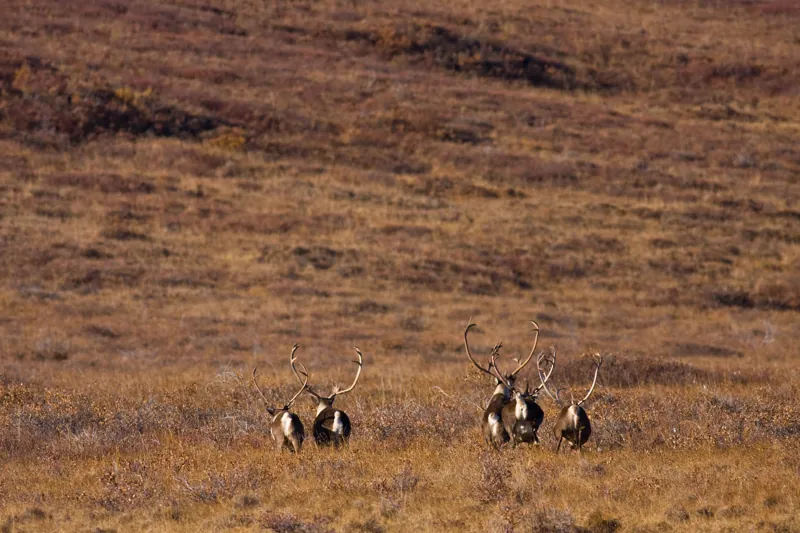
A 2019 study in Scientific Reports compared round-trip migration distances for land animals. Caribou came out on top: some herds in Alaska and Canada travel up to 1,350 kilometres a year between wintering and calving grounds. [Science News] The study itself notes that the distances shift with herd size. The Bathurst herd once migrated up to 1,500 km and now migrates about 1,350 km, and the Western Arctic Herd went from about 1,500 km at its peak population to about 1,250 km. [Sci. Rep. 2019]
Visitors with good timing
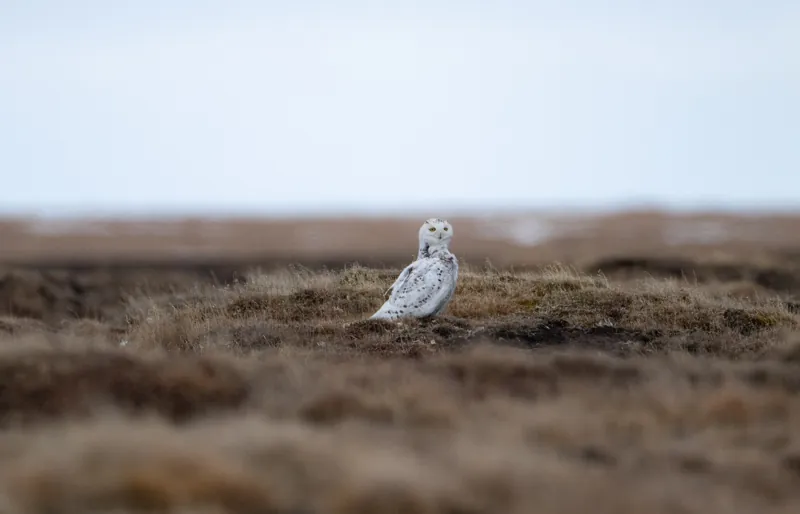
The snowy owl is a large, powerful owl of the high Arctic tundra. In summer it may be nomadic, nesting where lemmings are plentiful, and in the Arctic it may feed almost exclusively on lemmings when they are available. [Audubon] It lays 3 to 11 eggs, with more eggs laid in years when prey is abundant. [Audubon] At other times, Audubon says, it takes birds as big as geese. [Audubon]
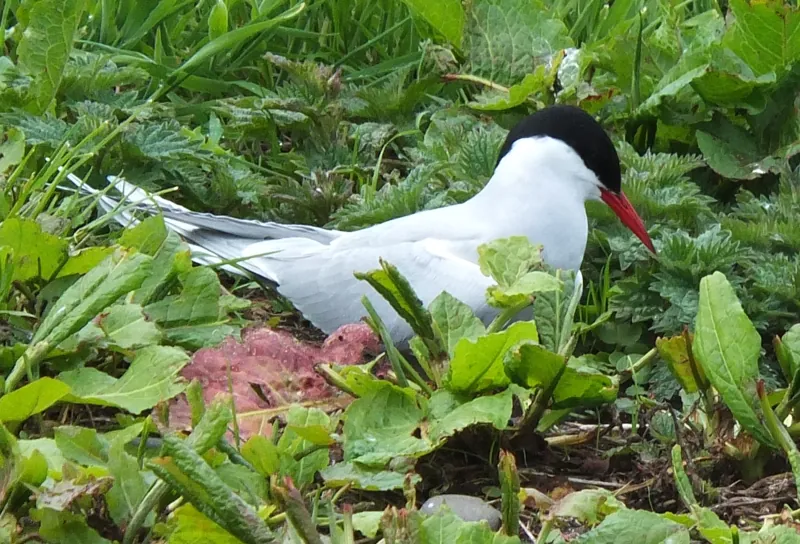
The Arctic tern is the long-distance champion. Tracking of eleven terns with 1.4-gram geolocators found some individuals travelling more than 80,000 km a year between boreal and high Arctic breeding grounds and the Southern Ocean. The bird itself weighs under 125 g. [PNAS 2010]
The caterpillar that takes seven summers
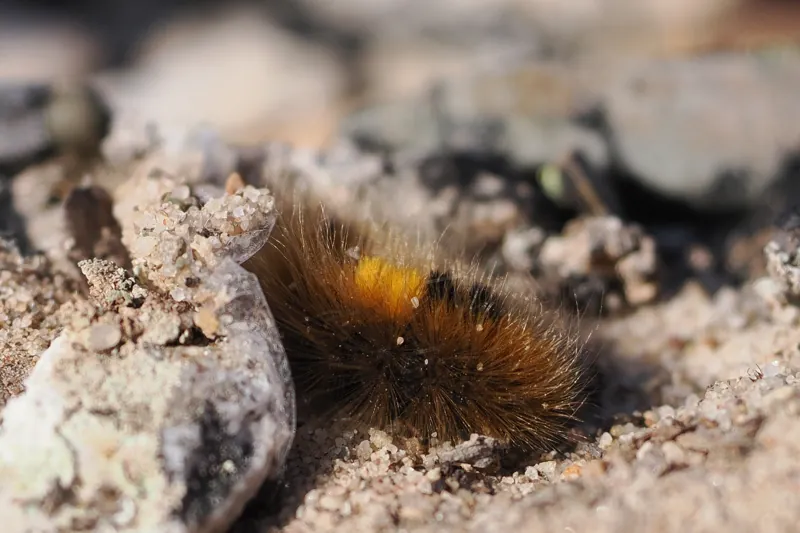
The Arctic woolly bear, Gynaephora groenlandica, spends almost its whole life as a caterpillar. A 1998 study at Alexandra Fiord on Ellesmere Island found that larvae moult once a year, every year, through seven larval stages. That points to a life cycle of about 7 years rather than the 14 published earlier. [Can. J. Zool. 1998] The older figure is on the myths page.
Kept apart: the animal facts on this page are Arctic tundra facts. Alpine tundra in the Rockies has its own cast, including the bighorn sheep on the alpine page.