Home · Discoveries
Frozen in time
What the permafrost gives back
Permafrost is ground that stays at or below 0°C for at least two years, and in many places it has been frozen for thousands of years. [NSIDC] That makes it the world’s largest, slowest freezer, and every so often something comes out of it that makes scientists drop their trowels.
Flowers from a squirrel’s larder, 31,800 years old
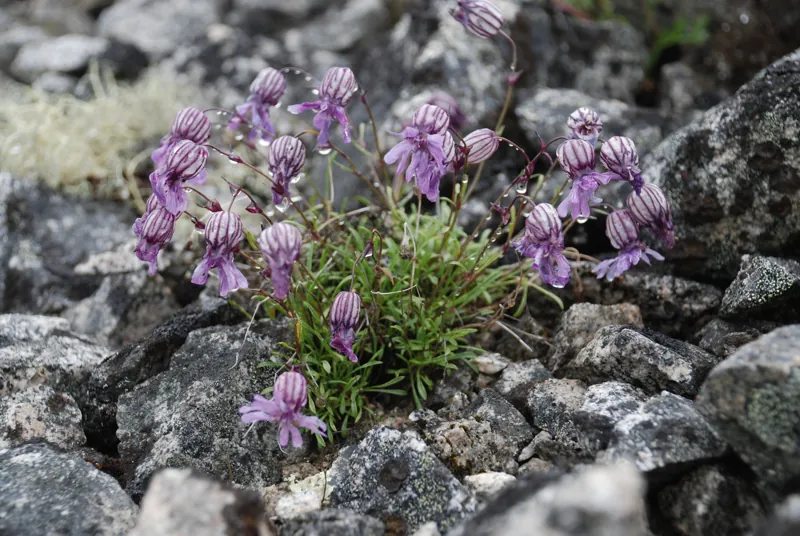
In 2012 a Russian team reported that they had grown whole, fertile plants from fruit tissue of Late Pleistocene age. The fruits came from fossil squirrel burrows buried 38 metres deep in permafrost that had never thawed, at −7°C, in north-eastern Siberia. Radiocarbon dating put the fruits at 31,800 ± 300 years old. [PNAS 2012] The regenerated plants flowered, fruited and set viable seed, and the authors described them as the most ancient viable multicellular living organisms then known. [PNAS 2012]
The squirrels did the clever part. When they dug their burrows, they built the seed chambers against the frozen boundary of the permafrost, which preserved the material unusually well. [PNAS 2012]
A disagreement, kept: the paper named the plant Silene stenophylla. A letter in the same journal later argued that the plants in its figures look like a different group, the Silene linnaeana group, rather than S. stenophylla. [PNAS letter] The age of the fruit was not the point in dispute; the species name was.
A worm that waited about 46,000 years
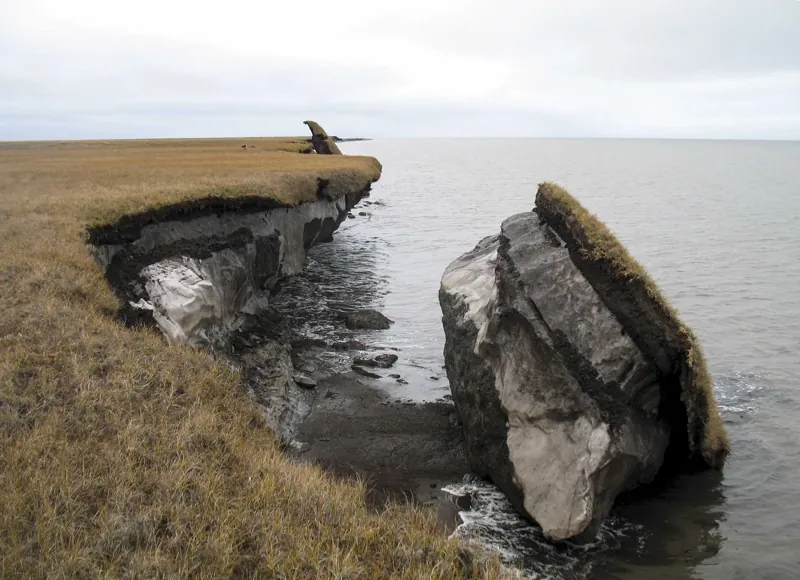
In 2023, researchers described a nematode revived from Siberian permafrost. It came from a fossil burrow about 40 metres below the surface at Duvanny Yar, on the Kolyma River, and plant material in the burrow was radiocarbon dated to a calibrated range of 45,839 to 47,769 years ago. [PLOS Genetics] The revived worm was cultivated for more than 100 generations and named as a new species, Panagrolaimus kolymaensis. [PLOS Genetics]
Not everyone is convinced: Scientific American reported that some scientists remain sceptical. One biologist said the dating shows the age of the plant material, not of the worms, and that the authors had not shown the animals were not surface contaminants. [Scientific American]
Dogor: dog or wolf?
Dogor was an 18,000-year-old puppy found in frozen mud in Siberia, so well preserved that scientists at first could not tell whether he was a wolf or an early dog. In 2022, genomic analysis showed he was a wolf. [QMUL]
Lyuba, the baby mammoth
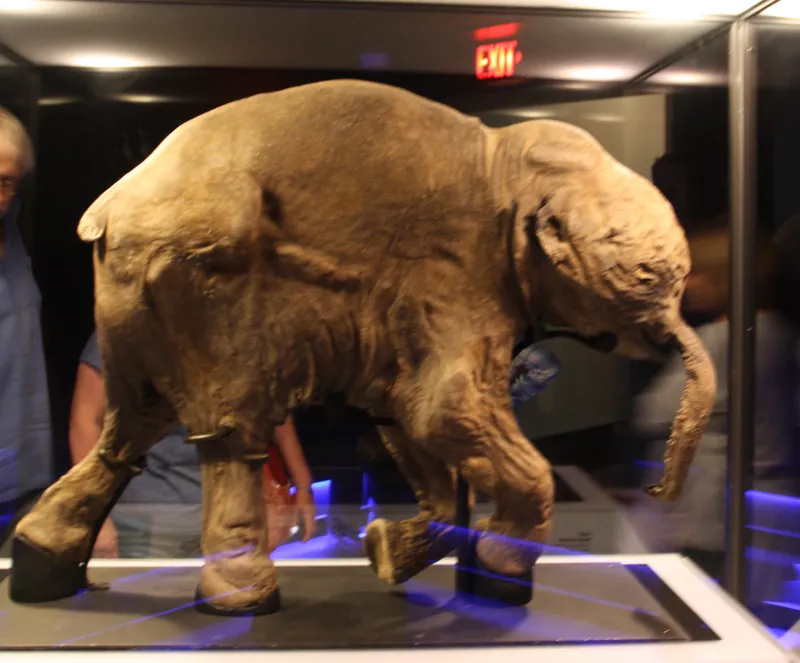
On a May morning in 2007, on the Yamal Peninsula in north-western Siberia, a Nenets reindeer herder named Yuri Khudi and three of his sons found a small corpse on a sandbar of the Yuribey River. It was a baby woolly mammoth, frozen for about 40,000 years, and so complete that one scientist said even her eyelashes were there. [National Geographic] Officials named her Lyuba, after Khudi’s wife. [National Geographic] By comparing her milk tusks with an elephant’s, scientists first estimated she was about four months old when she died. [National Geographic]
Khudi had seen many mammoth tusks before. His people found them each summer. [National Geographic] National Geographic also recorded a Nenets story, which is told here as a story: the mammoth is a beast that wanders the frozen underworld, herded there by gods, the way the Nenets herd reindeer across the tundra. [National Geographic]
Why things keep turning up
Thaw is the short answer. Sometimes people find whole animals frozen in the permafrost, NSIDC says, and big deposits of carbon-rich permafrost called yedoma have been found in Russia. [NSIDC] As ice-rich ground thaws and slumps, old layers are exposed. The changing tundra page has the most dramatic example, a crater in Siberia that tripled in area in under thirty years.