Home · Antarctica
The southern cousin
The other end of the world
The Park Service’s Arctic tundra is a northern-hemisphere biome, encircling the North Pole. [NPS Arctic] So this page does not call Antarctica “tundra”. But the small patches of ice-free ground at the other end of the planet face the same problems: cold, wind, a short summer and very little soil. What lives there is even sparser, and even stranger.
Less than one percent
Less than 1% of the Antarctic continent is ice-free, the British Antarctic Survey says. [BAS] On that small area grow just two species of flowering plant: Antarctic hair grass and Antarctic pearlwort. [BAS] Most of the plant life is mosses, liverworts and lichens, which are well adapted to the dry cold. [BAS] The sub-Antarctic islands are milder, and have tussock grass and more flowering species. [BAS]
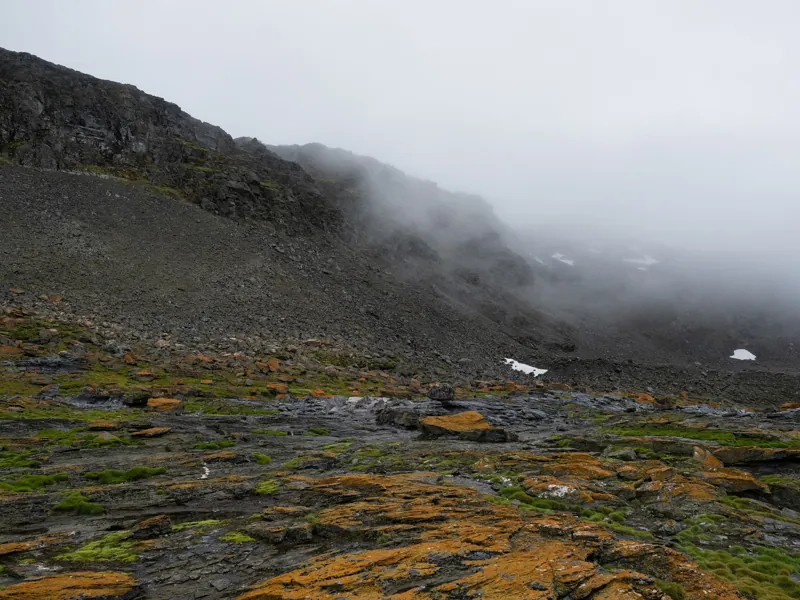
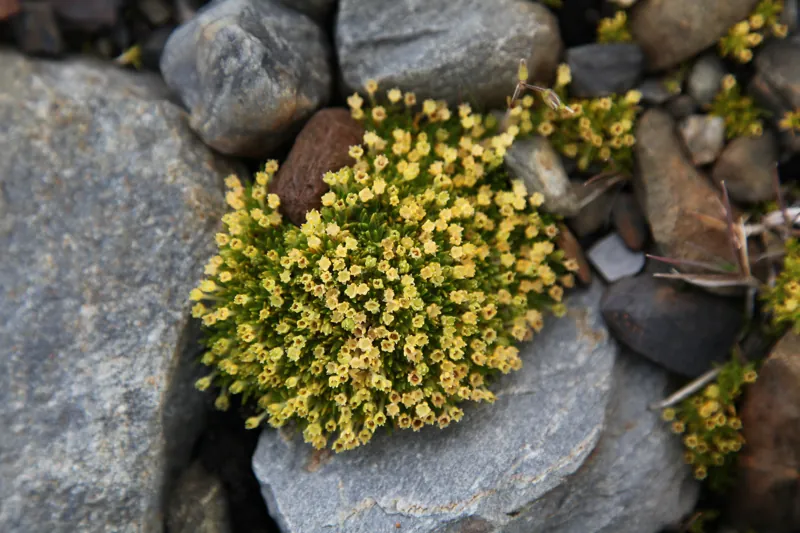
Compare that with the Arctic, where the tundra carries low shrubs, sedges, grasses and wildflowers across a whole ring of continents. The plants page has the northern list.
The biggest land animal is a midge
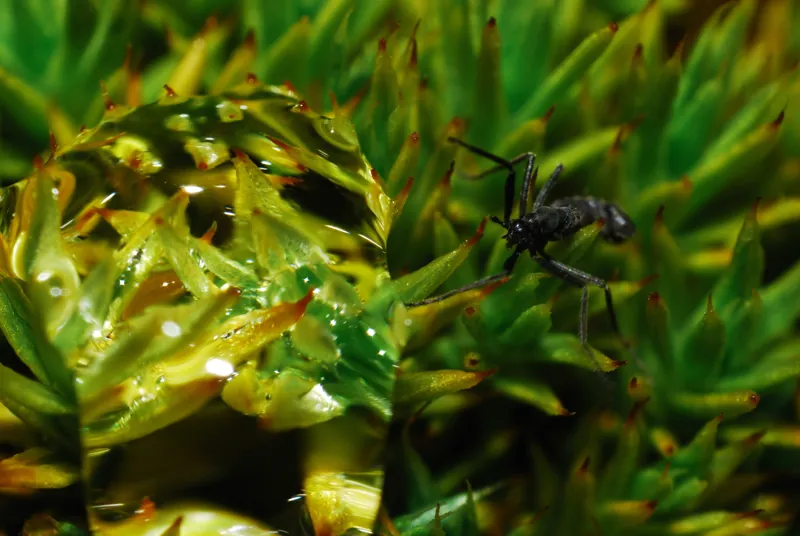
The largest animal living entirely on land in Antarctica is the Antarctic midge, Belgica antarctica, a flightless fly. Guinness World Records says it measures a mere 2 to 6 mm even as an adult, and has been recorded as far south as the Refuge Islands, at 68°21′S, south of the Antarctic Circle. [Guinness]
Two sizes, both kept: Guinness gives 2 to 6 mm for adults. [Guinness] The British Antarctic Survey caption describes the midge as only 1 to 2 mm long and weighing a few micrograms, and calls it one of the largest animals to complete its life cycle on the Antarctic continent. [BAS] We have not averaged them.
Why the two ends are so different
- The Arctic is an ocean ringed by land, so its tundra is a broad belt across North America, Europe and Asia that reaches south to the boreal forest. [NPS Arctic]
- Antarctica is a continent covered by ice and ringed by ocean, and only a tiny fraction of its ground is bare. [BAS]
- That is why the Arctic has muskoxen, caribou and foxes, and Antarctica’s land animals are measured in millimetres. The big Antarctic animals, the penguins, seals and whales, depend on the sea. [BAS]
For the ice itself, the coldest temperatures and the long polar night, see our sister site polar.climates.im.