Home · People
Not empty
People of the tundra
Maps sometimes show the tundra as blank. It isn’t. People have herded, hunted, fished and travelled across it for a very long time, and some of the best-known discoveries on this site were made by them, not by visiting scientists.
Sámi reindeer herding in Norway
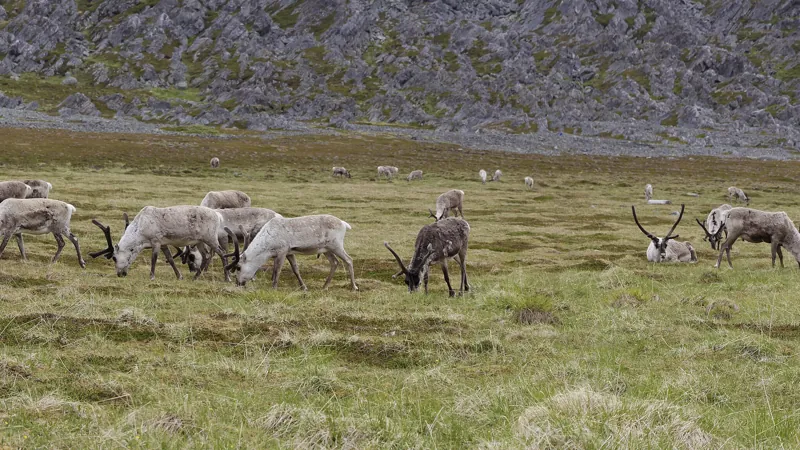
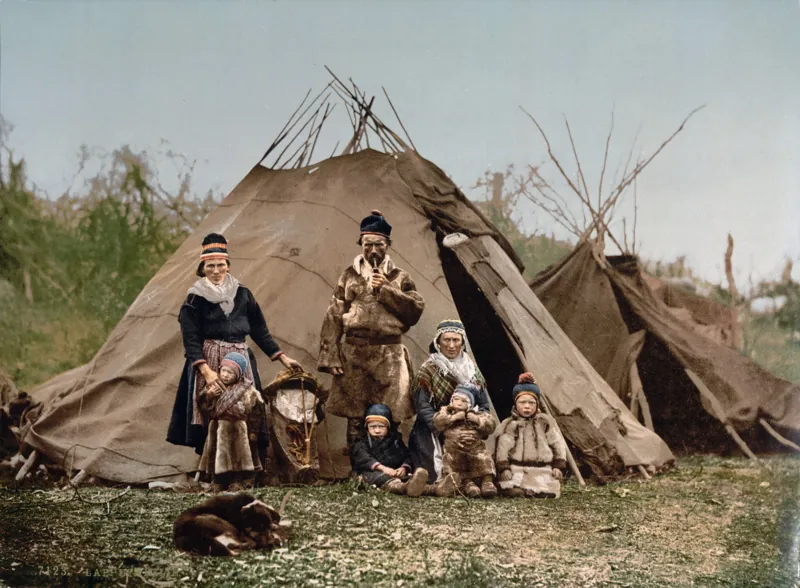
In Norway, the Sámi Parliament (Sametinget) says that about 3,200 people are connected with Sámi reindeer herding, and that about 215,000 animals belong to the industry. [Sametinget] Reindeer herding is organised in siidas, which Sametinget describes as smaller family groups, or a working community, that cooperate on the different jobs. [Sametinget] The Sámi reindeer-grazing area is divided into six reindeer-herding regions. [Sametinget]
Pingos as signposts
Around Tuktoyaktuk in the Northwest Territories, pingos rise out of the flat tundra. For centuries, Parks Canada says, they have served as navigation aids for Inuvialuit travelling by land and water. [Parks Canada] When everything else is flat, a 49-metre hill is a very good signpost. More on pingos is on the landforms page.
The herder who found a mammoth
In May 2007, Yuri Khudi, a Nenets reindeer herder, found the baby mammoth now known as Lyuba on a sandbar of the Yuribey River on the Yamal Peninsula. [National Geographic] He knew mammoth tusks well, because his people found them each summer. National Geographic records the Nenets story of the mammoth as a beast of the frozen underworld, herded there the way the Nenets herd reindeer across the tundra. [National Geographic] That is a traditional story, told here as one. The find itself is on the discoveries page.
Muskox wool, from Alaska
Qiviut, the underwool of the muskox, is gathered at captive herds in Alaska. ADF&G says tours, outreach and qiviut production are all important at the two facilities it describes. [ADF&G muskox] It is not itchy like sheep’s wool, because its fibres lack the hooks and barbs wool has. [ADF&G muskox]
A note on scope: this page gives a few sourced examples. It is not a history of the many Arctic peoples, from the Iñupiat and Inuit to the Sámi, Nenets and others, whose lands include the tundra. Their own organisations tell those histories best.